

Charles Taylor Book Award Honorable Mention 2018: Stefanie Fishel, for The Microbial State: Global Thriving and the Global State
This concise, sophisticated book presents an imaginative reinterpretation of the body politic in international relations theory. It engages with new materialism literature and interpretive methodology by displacing realist international relations metaphors that are rooted in Eurocentric conceptions of power.

Charles Taylor Book Award Honorable Mention 2018: Shiri Pasternak, for Grounded Authority: The Algonquins of Barriere Lake Against the State
Grounded Authority is well poised to engage in broader debates about Indigenous resistance across settler colonies. Pasternak foregrounds jurisdiction and disentangles it from sovereignty while visualizing jurisdiction as a density of lines against orthodox notions of hierarchy and scale.
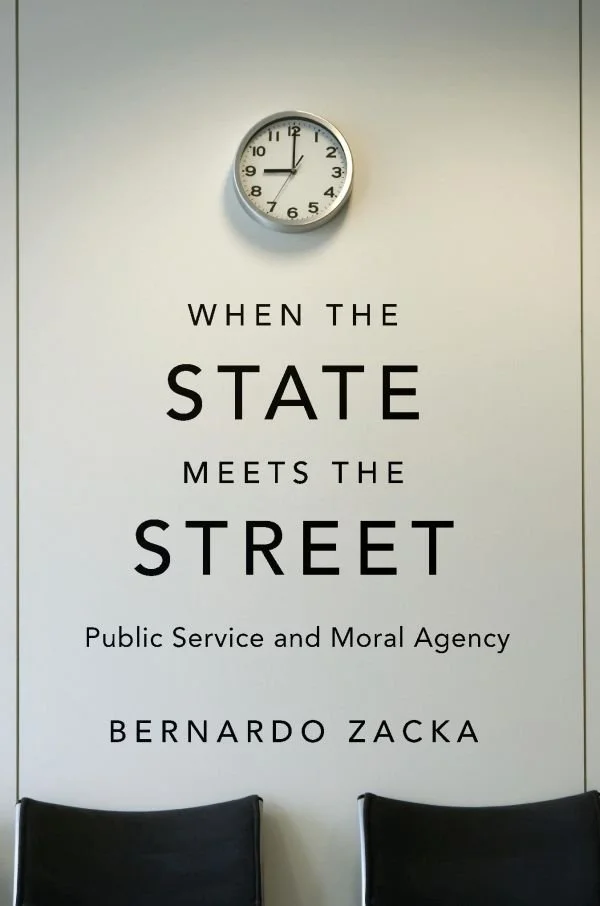
Charles Taylor Book Award Winner 2018: Bernardo Zacka, for When the State Meets the Street: Public Service and Moral Agency
When the State Meets the Street is well written and provides a rich, detailed and nuanced ethnography of the state by focusing on street-level bureaucracy at the frontlines of public service. The book builds from findings and an ethnographic sensibility to inform political theorizing about bureaucratic polities.

Grain of Sand Award Winners 2017: Peregrine Schwartz-Shea and Dvora Yanow
There can be no more deserving winners of the Grain of Sand Award than Peri Schwartz-Shea and Dvora Yanow. Everything they have done and accomplished fits the spirit of the award. Through broad, sustained, and no doubt lonely effort over the last fifteen years, they have worked to build a vibrant, eclectic, and self-sustaining community of interpretive scholars.

Charles Taylor Book Award Winner 2017: Sarah Marie Wiebe, for Everyday Exposure: Indigenous Mobilization and Environmental Justice in Canada’s Chemical Valley
Everyday Exposure is an interesting, surprising and outstanding text offering an exceptional interpretive analysis that takes the questions of environmental justice for the 850 Anishinabek people in the Aamjiwnaang Reserve, or Sarnia Reserve 45, in Canada's so-called Chemical Valley and makes it “home”.

Grain of Sand Award Winner 2016: Mary Hawkesworth
Some time in the early 1990s, in discussing the possible creation of a journal in what was coming to be called interpretive policy analysis, one of that field’s leading scholars observed about Mary Hawkesworth’s 1988 Theoretical Issues in Policy Analysis, that her having written it meant that the rest of us didn’t have to.

Charles Taylor Book Award Winner 2016: Daniel Kato, for Liberalizing Lynching: Building a New Racialized State
Kato’s study sets out to resolve a mystery. How could the practice of public lynching co-exist with liberal democracy in the U.S.?

Grain of Sand Award Winner 2014: Deborah A. Stone
As a scholar and as a human being, Deborah Stone is a model of how to make a difference in the world. She's a leading constructivist theorist who is deeply involved in the practical world of policy design and implementation and manages to build bridges of understanding across these too-separate worlds.

Charles Taylor Book Award Winner 2014: Paul Amar, for The Security Archipelago: Human-Security States, Sexuality Politics, and the End of Neoliberalism
Bringing together events, practices, and discourses in the global cities of Rio and Cairo, from the landmark United Nations summits held in these cities (in 1992 and 1994, respectively) to the present, Amar interweaves fascinating empirical detail and provocative meta-reflection on the trajectories and paradoxes of militarism, humanitarianism, and sexuality politics in our global age.

Grain of Sand Award Winner 2013: James C. Scott
Ever since his book The Moral Economy of the Peasant: Rebellion and Subsistence in Southeast Asia (1976), Jim Scott has demonstrated how the meaning-making of the people in the settings one studies is central to political understanding and analysis. Drawing on years of field research in Southeast Asia, Scott brought fine-grained attention to ethnographic detail into conversation with high level theory to produce sophisticated and persuasive accounts of the centrality of contextualized meaning-making to the operation of power.

Charles Taylor Book Award Winner 2013: Sharon Sliwinski, for Human Rights in Camera
Human Rights in Camera does that critical theoretical work Sheldon Wolin referred to as “making the familiar unfamiliar.” Sliwinski shows us that human rights are not revealed by reason alone, but through an experience of seeing, “imagined and idealized on the wings of aesthetic experience.”

Grain of Sand Award Winner 2011: Anne Norton
Anne Norton is an ideal honoree both for her scholarship and for the work she has done in the profession to expand the scope of what counts as knowing in political science. Her research record exemplifies her tireless efforts to change how political science is done and what types of political science are valued. Her 95 Theses on Politics, Culture & Method (Yale University Press, 2004) provides a stunning assault on political science orthodoxy and opens multiple possibilities for using interpretive and antifoundational approaches to understand power, politics, culture, and identity.