Charles Taylor Book Award Honorable Mention 2026: Lisa Vanhala, Governing the End: The Making of Climate Change Loss and Damage
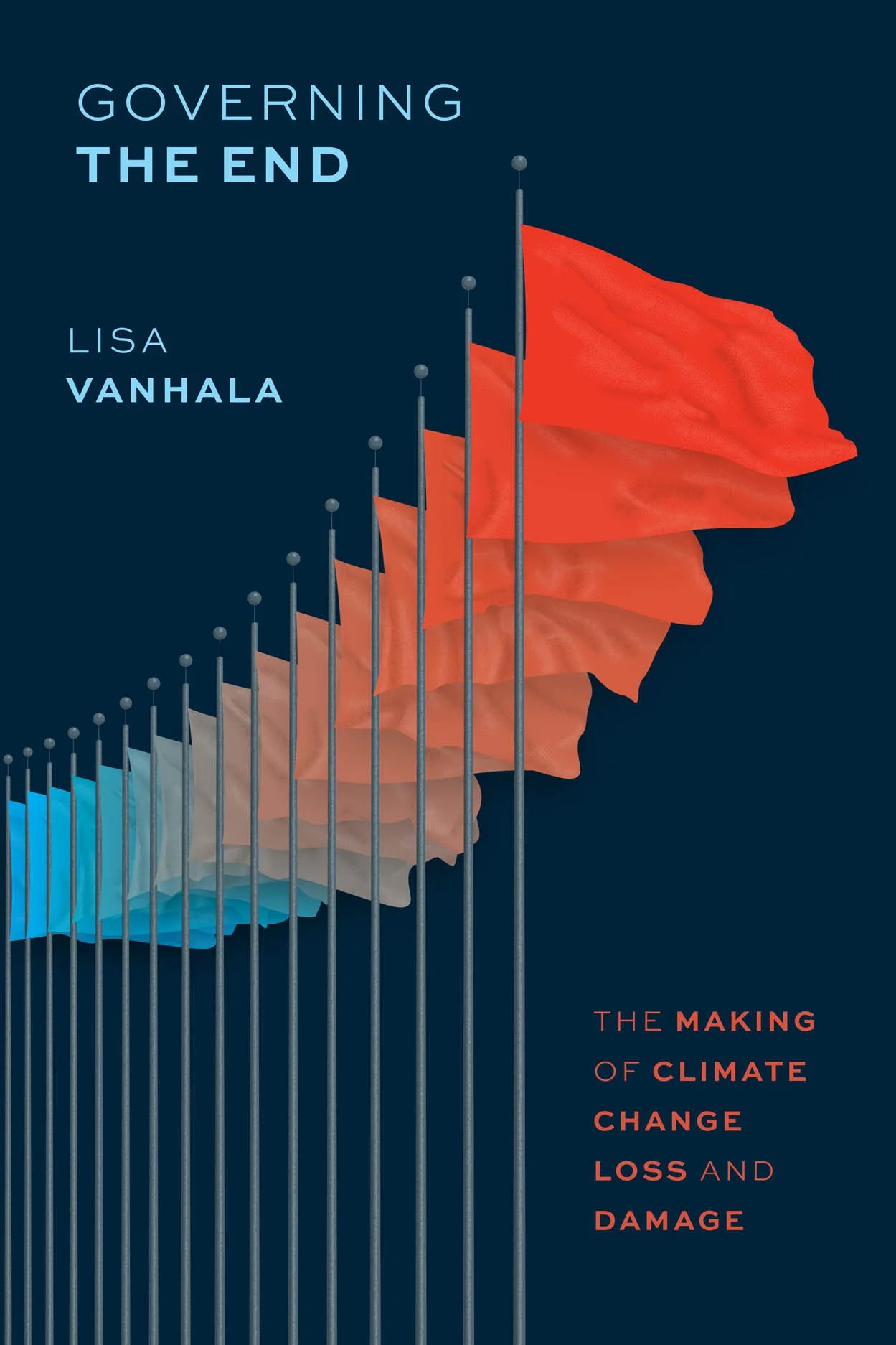
Honorable Mention: Lisa Vanhala (University College London) for Governing the End: The Making of Climate Change Loss and Damage (University of Chicago Press)
Lisa Vanhala’s Governing the End offers a careful, considered, and committed treatment of the global failure to respond to climate catastrophe, the most pressing problem of our time. Through impressive and long-term ethnographic work, she documents the often small and seemingly mundane decisions and processes that have created conditions of “ungovernance”—consistently and purposefully hollowing out responsibility and undermining authority to act. Urging us to see climate costs not as risks to be managed, but as substantive loss and damage already accruing to the world’s most vulnerablised, Vanhala’s innovative and important book painfully highlights the serious consequences of ungovernance for today’s global issues.
Throughout her volume, Vanhala traces the gradually unfurling failure to act in the face of impending and arriving climate catastrophe. Focusing not on intentional climate inaction, but how the failure to act was made, Vanhala’s careful observation and analysis paints a picture of abdication of responsibility and undermining of authority that results in the current ungovernance of climate issues.
Vanhala’s research is based in impressive ethnographic work, capturing micro-level observations to conceptualize both loss and damage in climate catastrophe, and the ways in which the positionality of actors creates and unmakes the idea of climate intervention as necessity. Drawing on years of research observing international climate negotiations, Vanhala shows how both official deliberation and informal conversation are constitutive of the negotiations. In doing so, Vanhala leverages her presence to observe what official reports do not capture. Vanhala’s work shines in her attention to the micro-decisions of the making of climate governance. In drawing her, and our, attention to small decisions—after-meeting social gatherings, the timing of online meetings, the language of deliberation, the relative levels of climate precarity of speakers, exits from the deliberation table—Vanhala leverages immersion to understand high-level international deliberation beyond the official documents and reports.
Governing the End expands our understanding of the ungovernance of climate change, and represents an important methodological intervention in studying a core subject in political science, and in human flourishing.
Selection Committee:
Carolyn Holmes (Chair), University of Tennessee – Knoxville
Joanna Wuest, Stony Brook University
Rebecca Tapscott, University of Glasgow